Blood-forming cells
Hematopoietic Stem Cells
Hematopoietic stem cells are specialized adult stem cells whose role is to create all the kinds of blood cells in the body during one's entire life span. These specialized adult stem cells…
Explore the blood system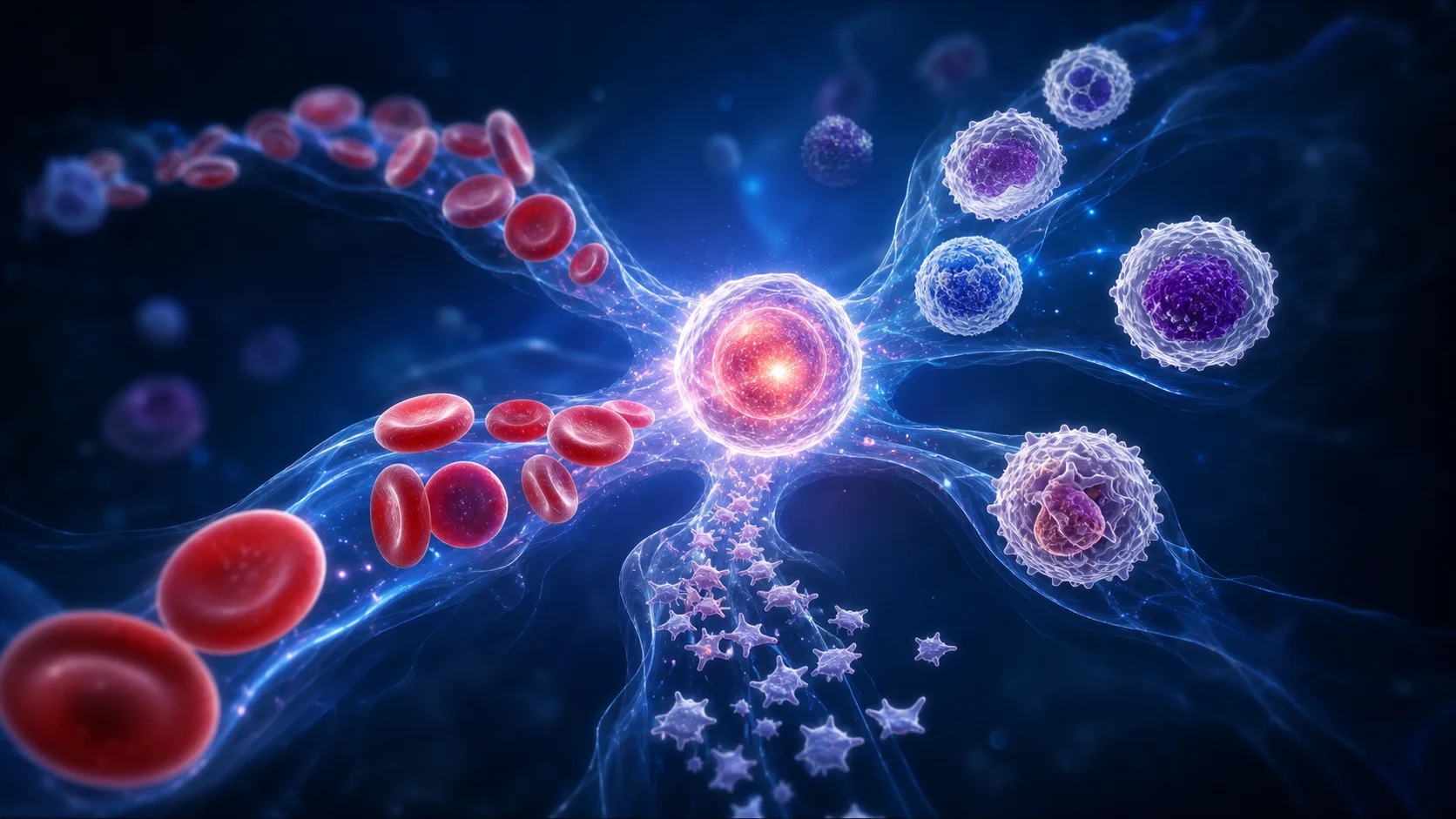
Blood system foundation
One adult stem cell population supports the full blood system.
Hematopoietic stem cells are specialized adult stem cells whose role is to create all the kinds of blood cells in the body during one's entire life span. These specialized adult stem cells are the basis of the body's blood forming system or haematopoietic system through the creation of new red blood cells, white blood cells, and platelets. Without such cells, the body will not be able to produce new blood cells that will replace aging cells.
Opposite to other kinds of stem cells which are still being researched in order to find its therapeutic uses, hematopoietic stem cells already have known therapeutic application in the field of clinical studies. Such cells have already been applied in bone marrow and blood stem cell transplantation for the treatment of selected cases of blood disorders, immunologic problems, and cancerous conditions based on medical protocols.
Hematopoietic Stem Cell Transplantation is carried out in Malaysia in accordance with recognized protocols through a team of medical specialists in designated hospitals. Continuous studies enhance both the clinical process and scientific understanding of hematopoietic stem cells.
Source taxonomy
Where Are Hematopoietic Stem Cells Found?
Bone Marrow
Bone marrow is the primary reservoir of adult hematopoietic stem cells. Situated in large bones like the pelvis, breastbone, and vertebrae, it consistently creates billions…
Natural habitat of hematopoietic stem cells is diverse as far as the location is concerned, however, bone marrow represents a major place for their dwelling in adults. Hematopoietic stem cells dwell in a special habitat called bone marrow niche which sends out biological messages that control their reproduction, proliferation and differentiation into various blood cells.
Besides being naturally located in the bone marrow, hematopoietic stem cells might be present in the circulating blood as well as in umbilical cord blood under certain conditions. Each source has its own peculiarities and thus it depends on the patient's state and medical protocols whether it is going to be used or not.
Bone Marrow
Bone marrow is the primary reservoir of adult hematopoietic stem cells. Situated in large bones like the pelvis, breastbone, and vertebrae, it consistently creates billions of blood cells each day. Bone marrow has been a classic source of stem cells for haematopoietic transplantations.
Peripheral Blood
While most hematopoietic stem cells usually reside in the bone marrow, they can be induced to enter the blood circulation through the use of particular drugs prior to harvesting. The procedure called peripheral blood stem cell harvesting is currently an established source of hematopoietic stem cells used in transplantation of suitable candidates.
Umbilical Cord Blood
Apart from bone marrow and peripheral blood, umbilical cord blood, taken from the umbilical cord after childbirth when parents give their consent, is a well-known source of hematopoietic stem cells. Such stem cells may be kept in cord blood banks for further usage in accordance with the relevant medical requirements.
Haematopoiesis
What Do Hematopoietic Stem Cells Do?
The major role of hematopoietic stem cells is to keep producing new healthy blood cells through our lives. Daily, millions of blood cells die out and need to be replaced. This is possible due to hematopoietic stem cells’ division, self-renewal, and development into different kinds of blood cells needed for proper functioning of our organism. The process, which is called haematopoiesis, is very important for having healthy blood circulation, oxygen delivery, coagulation, and immunity.
As opposed to other adult stem cells, which are responsible for maintenance of certain tissues only, hematopoietic stem cells provide maintenance of the whole system of blood formation. It is their ability to create many blood cell lines which makes them one of the most important populations of stem cells.
Blood Cells Produced by Hematopoietic Stem Cells
Red Blood Cells (Erythrocytes)
Red blood cells have oxygen within them. This is delivered through the lungs to various areas of the body. Red blood cells play an important role in the transportation of oxygen throughout the body.
White Blood Cells (Leukocytes)
The white blood cells are an important component of the body's immune system, as they help recognize and fight various bacteria, viruses, fungi, and other organisms that threaten the immune system.
Platelets (Thrombocytes)
Platelets contribute greatly to blood clotting. Platelets form clots when there is any injury, thus stopping blood flow through damaged blood vessels.
Red blood cells have oxygen within them. This is delivered through the lungs to various areas of the body. Red blood cells play an important role in the transportation of…
Clinical context
Conclusion
Hematopoietic stem cells represent the key components of the body's blood-forming system and continuously produce the red blood cells, white blood cells and platelets needed for survival. The special property of these stem cells which allows regeneration of blood and immune system has contributed to their status as one of the most advanced and widely used types of stem cells in medicine today. While some branches of regenerative medicine are still in an early experimental stage, hematopoietic stem cell transplantation has been used for several decades in treatment of certain diseases of the blood and immune system on a clinical basis.
The aim of Stem Cell Malaysia is to offer factual information about different types of stem cells and their use in healthcare. It is important to know how hematopoietic stem cells work in order to understand their significance for the use in current medicine and future research. If you want to find out whether hematopoietic stem cell transplantation can help you with your disease, please consult a healthcare professional.
Hematopoietic stem cell questions
Frequently Asked Questions
The hematopoietic stem cell is an adult stem cell that gives rise to various types of blood cells including red blood cells, white blood cells, and platelets. The hematopoietic stem cells play a vital role in the formation of blood and the immune system.
Hematopoietic stem cells reside in bone marrow, but can be isolated also from peripheral blood and umbilical cord blood, where clinical conditions are suitable.
The primary duty of hematopoietic stem cells is the constant formation of new blood cells to replace older ones through the mechanism of haematopoiesis.
Hematopoietic stem cells are distinguished by their ability to create both blood cells and immune cells, whereas mesenchymal stem cells are able to form only connective tissue cells such as bone, cartilage, adipose, and muscle cells.
Some of the conditions that can be currently treated with hematopoietic stem cell transplantation include some types of leukaemia, lymphoma, multiple myeloma, aplastic anaemia, hereditary blood diseases, and immune disorders.
Blood-forming stem cells
Connect cell biology with established transplant medicine.
Hematopoietic stem cells rebuild blood and immune cell production and underpin specialist HSCT care.
Explore HSCT